
SEO Tips & Search Ranking Insights
13 min read
What is Local SEO and Why Every Indian Small Business Needs It

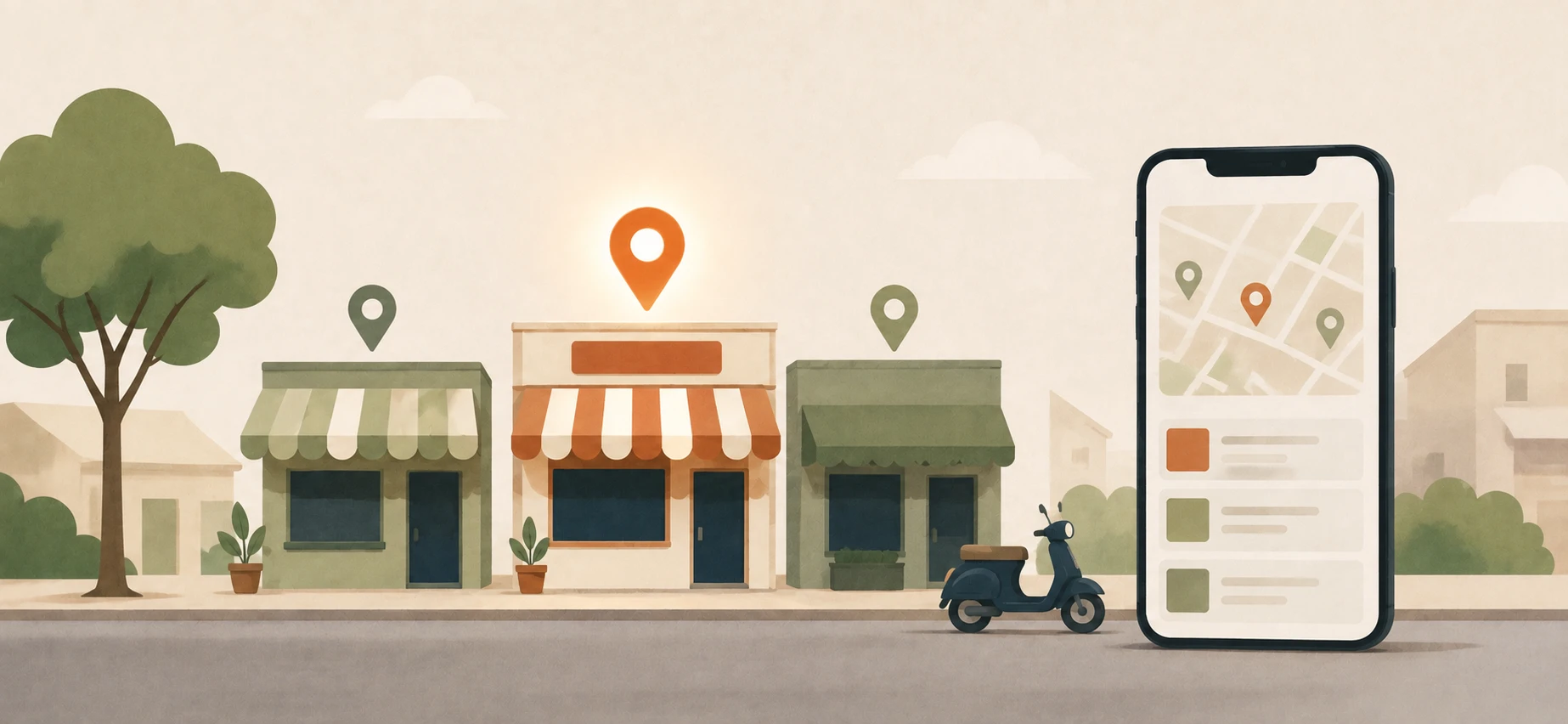
Think about the last time you needed something in your own city — a physiotherapist, a car service, a place to eat after 9pm. You almost certainly didn't ask a friend. You picked up your phone, typed a few words, and chose from whatever appeared first.
Every customer you want is doing exactly that about your business, several times a day. Local SEO is the difference between being one of the options they see and not existing at that moment at all.
This guide explains what local SEO actually is, how Google decides which businesses to show, what it realistically costs and how long it takes in India — and, because most guides ignore this, what to do if you don't have a shopfront at all.
What Local SEO Actually Means
Local SEO is the practice of getting your business to appear when someone nearby searches for what you sell.
The distinction from ordinary SEO is worth being precise about, because it changes what you have to do. Ordinary SEO is a contest against everyone publishing on the same subject anywhere in the world. Local SEO is a contest against the handful of businesses in your area that do the same thing you do. That is a far smaller fight, and a far more winnable one for a small business.
It also plays out somewhere different. Most local searches are answered in the map results — the small cluster of three businesses shown with a map, star ratings, distance and a call button — rather than in the blue links underneath. That block is the prize. Being on page one of the ordinary results while your competitors occupy the map is a bit like having a beautiful signboard on a road nobody drives down.
| Traditional SEO | Local SEO |
|---|---|
| Competes with the whole internet | Competes with businesses in your area |
| Ranks web pages | Ranks your business listing and pages together |
| Driven by content and backlinks | Driven by profile, proximity, reviews and consistency |
| Usually takes six months or more | Can produce calls within weeks |
| Success measured in traffic | Success measured in calls, directions and visits |
How Google Decides Which Local Businesses to Show
Google's local ranking comes down to three things, and understanding them tells you where to spend your effort.
Relevance
How well your business matches what was typed. This is the part you control most directly, and it is mostly about being specific. A profile that says "Ravi Enterprises" with no category, no services and no description gives Google nothing to match against. One that clearly states it is an air conditioner repair service, lists the brands it services, and names the areas it covers gives Google dozens of possible matches.
Distance
How far you are from the person searching, or from the place they mentioned. This is the factor nobody can optimise away, and it is the single most misunderstood thing about local SEO. You will not consistently outrank a competitor located much closer to the searcher, no matter how good your website is. What you can do is rank strongly in the area you actually sit in, and reach adjacent areas through pages and content built for them rather than through the map alone.
Prominence
How well known and well regarded your business appears to be. Reviews carry a lot of weight here — the number of them, their average rating, how recent they are, and whether you reply. So do mentions of your business elsewhere on the web, links to your site, and how consistently your name, address and phone number appear across the internet. Prominence is the slow part, and it is where most small businesses quietly beat larger competitors, because a genuinely well-liked local business can accumulate real reviews faster than a chain can.
Why This Matters More in India Than the Global Guides Suggest
Most local SEO advice is translated from markets where people search in one language, on a laptop, and then fill in a form. Very little of that describes how discovery actually works here.
- It is a phone-first, map-first habit. Searches happen while people are already out, often while deciding between two places within a few minutes of each other. Your opening hours, your photos and your distance decide it, frequently without anyone visiting your website at all.
- People search in mixed language. A significant share of queries in Gujarat, Maharashtra and the Hindi belt are typed or spoken in a mix of English and the local language, or in a regional language written in Roman letters. If your profile and pages only ever use formal English terms, you are matching a narrower set of queries than you think.
- Voice search changes the phrasing. Spoken queries are longer and more conversational — a full question rather than two keywords. Content that answers questions plainly tends to pick these up.
- Directories still matter here. Platforms like JustDial, IndiaMART, Sulekha and category sites such as Practo remain part of how people find businesses, and they double as citations that reinforce your details. They are not a replacement for a Google Business Profile, but inconsistent details across them actively work against you.
- The enquiry ends up on WhatsApp. Someone who finds you on the map will very often message rather than call. If there is no WhatsApp route from your listing or site, you lose people who were ready to talk.
The practical upshot is that local SEO in India is less about clever technical work and more about being completely, consistently findable in the places and phrasings your customers actually use. That's the same argument we made in how small brands compete with big companies — specificity is the advantage a small business has and a national brand doesn't.
It Isn't Only About Google Any More
A growing share of local discovery now happens through AI-generated answers, whether that's the summary at the top of a search page or a customer asking an assistant for a recommendation directly.
This sounds like a threat to local SEO. In practice it raises the stakes on exactly the same fundamentals. Those systems assemble their answers from business profiles, reviews, directory listings and website content — the same material local search uses. A business with a complete profile, a healthy set of recent reviews and clear service and location information on its own site is legible to them. A business with a half-finished listing and no reviews is invisible to a person and to a machine for the same reason.
The one genuine change is that being merely present is no longer enough. Details need to be explicit — what you do, where, for whom, at what sort of price, with what hours — because summaries are assembled from stated facts, not inferred from a nice-looking homepage. If you're thinking about how AI fits into a small marketing operation more broadly, our roundup of AI tools for small business marketing covers where it genuinely saves time.
What If You Don't Have a Shopfront?
This is where nearly every "what is local SEO" article stops being useful, and it applies to a large share of small businesses — electricians, tutors, photographers, caterers, event planners, consultants, anyone who travels to the customer or works from home.
You can still do all of this. Google supports service-area businesses: you register the areas you serve and hide your street address, so you appear for searches in those areas without publishing where you live. The profile works normally in every other respect.
Two rules matter more for these businesses than for anyone else. First, list the areas you genuinely serve, not every locality you'd like to. Overstating your coverage produces weak visibility everywhere rather than strong visibility somewhere. Second, never invent an address in a locality where you have no real presence. Listings created this way get removed, and recovering a suspended profile is far harder than building one honestly.
If you cover several distinct areas, the way to reach beyond your map radius is with pages on your own website for each one — real pages describing the work you do there, not the same paragraph with the town name swapped out. That's slow, honest work, and it's the part competitors usually can't be bothered to do.
What Local SEO Costs
Less than most owners expect, because the highest-value work is free.
Claiming and completing your Google Business Profile, adding your categories and services, uploading real photographs, keeping your hours accurate, asking customers for reviews and replying to them, and fixing inconsistent details across directories — all of that costs time and nothing else. For a single-location business, that is the majority of the available benefit.
What costs money is everything beyond it: a website that loads quickly and converts, location pages for multiple areas, ongoing content, technical fixes, and managing reviews at volume. Agency-managed local SEO in India typically starts in the mid-thousands of rupees a month for a single location and rises with the number of locations and how competitive the category is. Whether that's worth paying for depends on how much a single new customer is worth to you — for a clinic or a contractor, one extra job a month usually covers it comfortably.
The costliest mistake isn't overspending. It's paying for visibility and sending it to a website that quietly turns people away, which is what our post on 10 signs your website is costing you customers is about.
How Long Before It Works
Local SEO is unusual among organic marketing channels in that some of it works almost immediately.
- Weeks 1–4: a newly completed, verified profile often starts producing calls and direction requests within days, especially in categories where competitors have neglected theirs.
- Months 2–3: as reviews accumulate and your details become consistent across the web, you begin appearing for more variations of what people search, not just your business name.
- Months 4–6: competitive rankings for the searches you actually want. This is where most of the value sits, and where most businesses have already stopped paying attention.
- Beyond: maintenance. Reviews go stale, hours change, competitors improve. Local visibility is held, not won once.
Metros and crowded categories take longer than smaller cities. If you're in a Tier-2 or Tier-3 city, you'll often find the local competition has barely started, which makes the first three months unusually productive.
How to Tell If It's Actually Working
Rankings are a poor measure here, because local results differ for every person depending on where they are standing. Two people in the same city can see different map results at the same moment. Chasing a single ranking position is a waste of attention.
Watch these instead:
- Calls, direction requests and website clicks from your Google Business Profile, tracked month over month.
- How many searches reached you by category rather than by your business name — the shift from people looking for you to people looking for what you do.
- New reviews per month, and how quickly you reply.
- Enquiries that begin "I found you on Google", which you'll only know if you ask every customer and write it down.
That last one remains the most reliable measurement available to a small business, and it costs nothing but the discipline to keep asking.
What Local SEO Can't Do
Being honest about the limits saves a lot of disappointment.
It cannot create demand that doesn't exist — if almost nobody searches for your category locally, being first for it wins you very little, and social or paid discovery will do more. It cannot overcome distance for customers on the other side of a large city. It cannot rescue a business with genuinely poor reviews; visibility only accelerates whatever reputation you already have. And it cannot fix a broken follow-up process, which is where a surprising number of local enquiries actually die.
For visual and discovery-led businesses — boutiques, cafés, salons, anything people didn't know they wanted — local SEO works best alongside organic social rather than instead of it. Our guide to growing a local business on Instagram without paid ads covers that other half.
Where to Start This Week
If you do nothing else: claim and fully complete your Google Business Profile, add real photographs of the place and the work, make sure the hours are correct, and ask ten recent customers for a review. That single afternoon of work outperforms most of what a small business could otherwise do with the same time.
When you're ready for the full sequence, our local SEO checklist for small businesses in Gujarat takes it step by step, and it's the practical companion to everything described here. Beyond that, the compounding work — location pages, content, technical health, review systems — is ordinary search engine optimization applied to a local footprint.
Local SEO isn't a way to beat the internet. It's a way to stop competing with it — and to compete instead with the four businesses in your area that do what you do.
Want nearby customers finding you before they find anyone else?
We build local search visibility for small businesses across India — profiles, reviews and pages that bring people through the door.
Frequently Asked Questions
What is local SEO in simple terms?
Local SEO is the work of making your business appear when someone nearby searches for what you sell. Instead of competing with the whole internet, you are competing to be one of the few businesses Google shows on the map and in the results for your area. Most of it happens through your Google Business Profile, your reviews, and the pages on your website that mention where you operate.
Do I need a shop or office to do local SEO?
No. Businesses that travel to customers, such as electricians, tutors, photographers and caterers, can register as service-area businesses and hide their address while still listing the areas they cover. What you cannot do is invent an address in a locality where you have no presence, because Google removes listings for that and it is difficult to recover from.
How long does local SEO take to show results in India?
A properly completed Google Business Profile can start producing calls within weeks, which makes local SEO faster than most other organic marketing. Competitive rankings for the searches you want usually take around three to six months of consistent review collection, posting and page work. Highly competitive categories in the metros can take longer than that.
How much does local SEO cost for a small business in India?
The essential work costs nothing but time. Claiming and completing your profile, collecting reviews and fixing your listings are free, and for a single-location business that is most of the benefit. Agency-managed local SEO in India generally starts in the mid-thousands per month and rises with the number of locations, the competitiveness of the category and how much content and technical work is included.
Is local SEO still relevant now that people ask AI tools for recommendations?
It matters more, not less. AI answers and assistants draw heavily on the same underlying sources as local search, including business profiles, reviews, directory listings and your own website. A business with an incomplete profile, no reviews and inconsistent details is invisible to those systems for the same reason it is invisible on the map.
Latest Posts






Relevant Post


Satish M
With 15 years in IT and a passion for pixels, Satish is the brain behind Buzzlane. As a Web Designer and Front-End Developer turned founder, he knows what makes the web work — and more importantly, what makes it wow.